


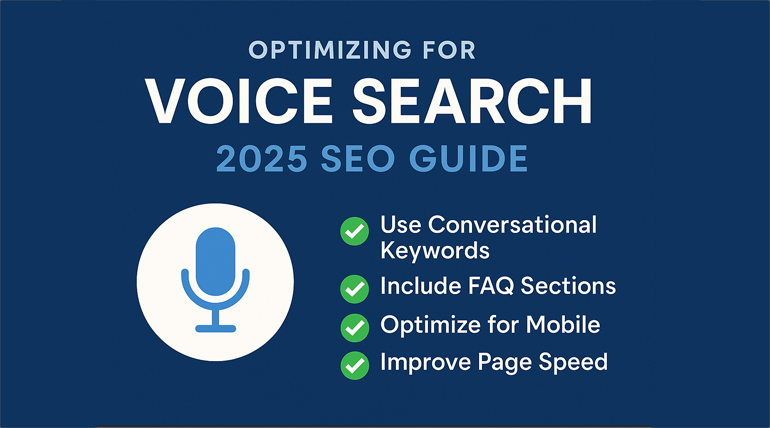
Voice search is growing fast. People now use voice assistants like Alexa, Siri, and Google Assistant to search online using their voice instead of typing. By 2025, voice search is a big part of SEO (Search Engine Optimization).
If you want your website to show up in voice search results, this guide is for you!
What is Voice Search?
Voice search means speaking to a device (like a phone or smart speaker) to get information, instead of typing it. For example:
🗣️ “What’s the best pizza place near me?”
Voice assistants answer using information they find from websites.
Why is Voice Search Important in 2025?
- 📈 Over 50% of all searches are now voice-based.
- 🧠 It gives quick, direct answers.
- 📱 Used on mobile phones, smart speakers, and even smart TVs.
- 🚀 Google and other search engines now prefer sites that are voice-search friendly.
How to Optimize Your Website for Voice Search
1.Use Natural, Conversational Language
- People speak differently than they type.
- Use full sentences and simple words.
- Focus on question-based keywords (Who, What, Where, When, Why, How).
📌 Example: Instead of “weather Delhi”, people say “What is the weather in Delhi today?”
2.Answer Questions Clearly (Use FAQ Format)
- Create a Frequently Asked Questions (FAQ) section on your pages.
- Answer each question in a short, clear sentence (aim for 30–40 words).
- These answers may be picked as featured snippets in voice results.
3. Use Long-Tail Keywords
- Long-tail keywords are longer phrases people use when speaking.
- Example:
Instead of “SEO tips”, use “What are the best SEO tips for beginners in 2025?”
4. Optimize for Mobile
- Most voice searches happen on mobile.
- Your website must be mobile-friendly:
- Fast loading time
- Easy to read
- Responsive design
5. Improve Page Speed
- Voice search needs quick answers.
- A slow website won’t rank in voice results.
- 📌 Tools to check speed:
- Google PageSpeed Insights
- GTmetrix
6. Use Structured Data (Schema Markup)
- Helps search engines understand your content.
- Use schema for:
- FAQs
- Products
- Reviews
- Local business info
- 📌 Example:
If you own a restaurant, use local schema to show your address, hours, etc.
7. Focus on Local SEO
- Many voice searches are local.
Example: “Best dentist near me” - Make sure your Google Business Profile is updated:
- Name, Address, Phone number (NAP)
- Opening hours
- Customer reviews
8. Create Voice-Friendly Content
- Use simple sentences and short paragraphs.
- Add headings and bullet points for easy reading.
- Avoid too much technical language.
9. Use SSL Certificate (HTTPS)
- Secure websites are ranked higher.
- Voice assistants prefer safe websites.
10. Track and Improve
- Use tools like:
- Google Search Console
- Google Analytics
- Answer the Public (for voice-style keyword ideas)
Check what users are asking and how they reach your site. Update your content based on this data.
Future Trends in Voice Search (2025)
- More people will use voice search in their native languages.
- AI will understand complex questions better.
- Websites that give fast, clear, and helpful answers will win.
Summary Checklist
| Task | Done |
|---|---|
| Use conversational keywords |  |
| Add FAQ sections | |
| Focus on long-tail keywords | |
| Make site mobile-friendly | |
| Speed up your site | |
| Use schema markup | |
| Optimize for local search | |
| Create simple, scannable content | |
| Use HTTPS | |
| Track results | |
Final Words
Voice search is not the future — it’s already here. If you want your website to stay visible and competitive in 2025, start optimizing now. Speak the language of your users, and your content will reach them faster and better.
