


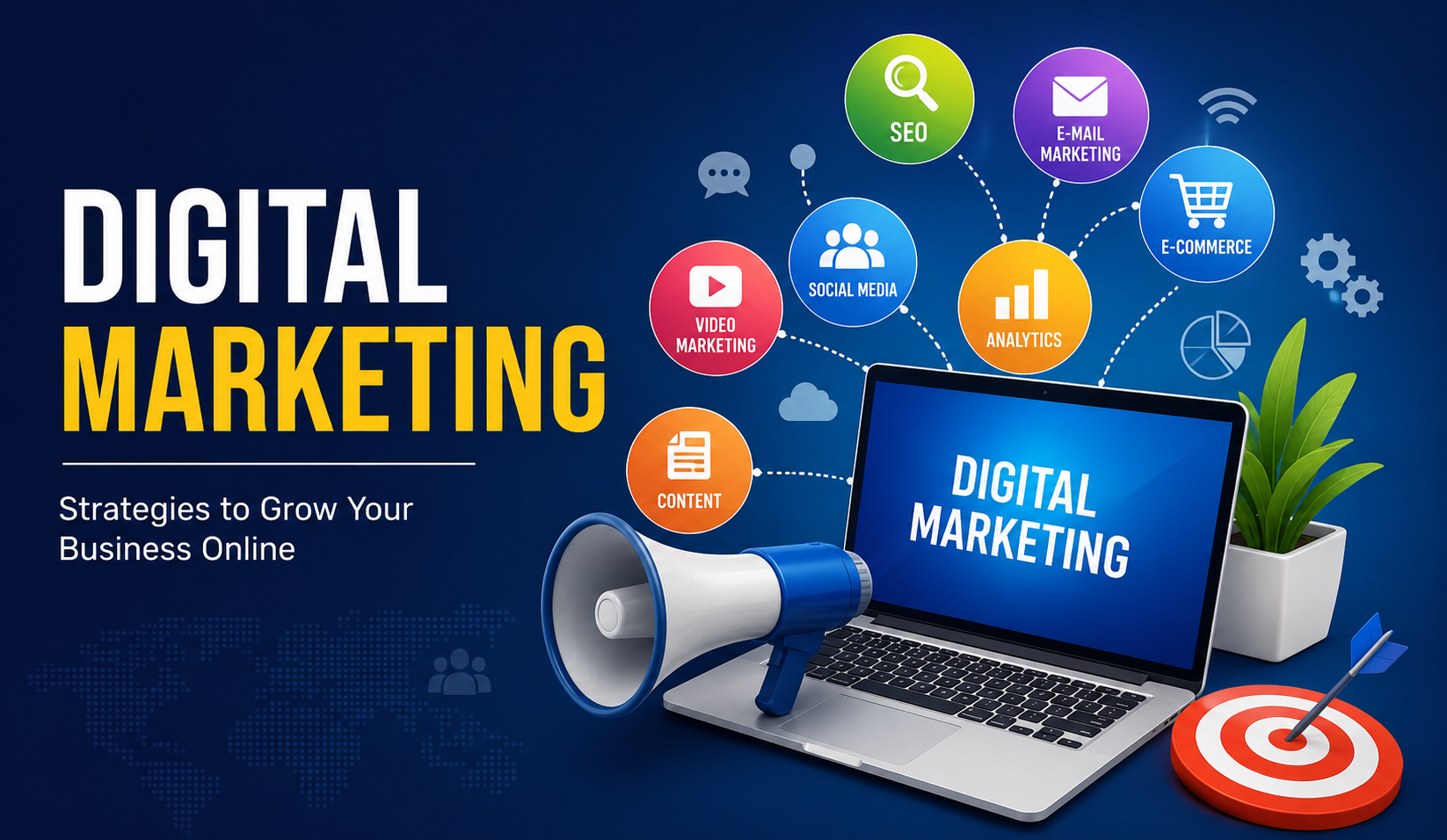
What is Digital Marketing?
Digital marketing is the process of promoting products, services, or brands using online platforms and digital technologies. Businesses use digital marketing to connect with customers through search engines, websites, social media, email, and mobile applications.
In today’s competitive world, digital marketing helps companies reach targeted audiences, generate leads, increase sales, and build strong brand awareness more effectively than traditional marketing methods.
Why Digital Marketing is Important
Digital marketing has become essential for businesses of all sizes because most customers spend significant time online. Whether people are searching on Google, scrolling through social media, or checking emails, digital marketing allows businesses to engage with potential customers directly.
Some major benefits include:
- Global audience reach
- Cost-effective advertising
- Better customer targeting
- Higher conversion rates
- Real-time performance tracking
- Improved customer engagement
Businesses that invest in digital marketing often experience faster growth and stronger online visibility.
Types of Digital Marketing
Search Engine Optimization (SEO)
SEO is the process of optimizing a website to rank higher on search engines like Google. The goal is to increase organic traffic by improving website content, speed, keywords, and backlinks.
Benefits of SEO:
- Increases website visibility
- Generates free organic traffic
- Builds trust and authority
- Improves user experience
Social Media Marketing
Social media marketing involves promoting businesses on platforms such as Facebook, Instagram, LinkedIn, X (Twitter), and TikTok.
Businesses use social media to:
- Connect with audiences
- Share updates and promotions
- Build brand loyalty
- Drive website traffic
Consistent posting and audience engagement are important for successful social media marketing.
Content Marketing
Content marketing focuses on creating valuable and informative content to attract and retain customers.
Popular content formats include:
- Blog posts
- Articles
- Videos
- Infographics
- Podcasts
- E-books
High-quality content helps businesses establish authority and improve SEO rankings.
Email Marketing
Email marketing is one of the most effective digital marketing strategies for customer retention and lead generation.
Businesses send emails for:
- Promotions
- Newsletters
- Product updates
- Event invitations
- Personalized offers
A well-planned email campaign can significantly improve customer relationships and sales.
Pay-Per-Click Advertising (PPC)
PPC advertising allows businesses to display ads on search engines and pay only when users click on the ads.
Popular PPC platforms include:
- Google Ads
- Facebook Ads
- Instagram Ads
- LinkedIn Ads
PPC helps businesses generate instant traffic and reach highly targeted audiences.
Digital Marketing Strategies
Successful digital marketing requires a clear strategy. Businesses should focus on understanding their audience, setting goals, and choosing the right marketing channels.
Important strategies include:
- Keyword research
- Mobile-friendly website design
- Content optimization
- Social media engagement
- Data analysis
- Conversion optimization
Consistency and continuous improvement are key factors in achieving long-term success.
Advantages of Digital Marketing
Digital marketing offers several advantages over traditional marketing methods.
Cost Efficiency
Online marketing campaigns are generally more affordable than TV, radio, or print advertising.
Measurable Results
Businesses can track clicks, conversions, traffic, and sales using analytics tools.
Better Targeting
Digital platforms allow marketers to target users based on age, location, interests, and behavior.
Higher Engagement
Businesses can communicate directly with customers through comments, messages, and emails.
Challenges in Digital Marketing
Although digital marketing provides many benefits, businesses may also face certain challenges.
Common challenges include:
- High competition
- Constant algorithm changes
- Content saturation
- Managing multiple platforms
- Keeping up with trends
Businesses must continuously adapt their strategies to remain competitive in the digital landscape.
Future of Digital Marketing
The future of digital marketing is rapidly evolving with new technologies and consumer behaviors.
Emerging trends include:
- Artificial Intelligence (AI)
- Voice search optimization
- Video marketing
- Influencer marketing
- Automation tools
- Personalized customer experiences
Companies that adopt modern digital marketing techniques can stay ahead of competitors and achieve sustainable growth.
Conclusion
Digital marketing has transformed the way businesses connect with customers. From SEO and social media to email campaigns and paid advertising, digital marketing provides powerful tools for business growth.
By implementing effective digital marketing strategies, businesses can improve brand visibility, attract more customers, and increase revenue in the modern digital world.
